




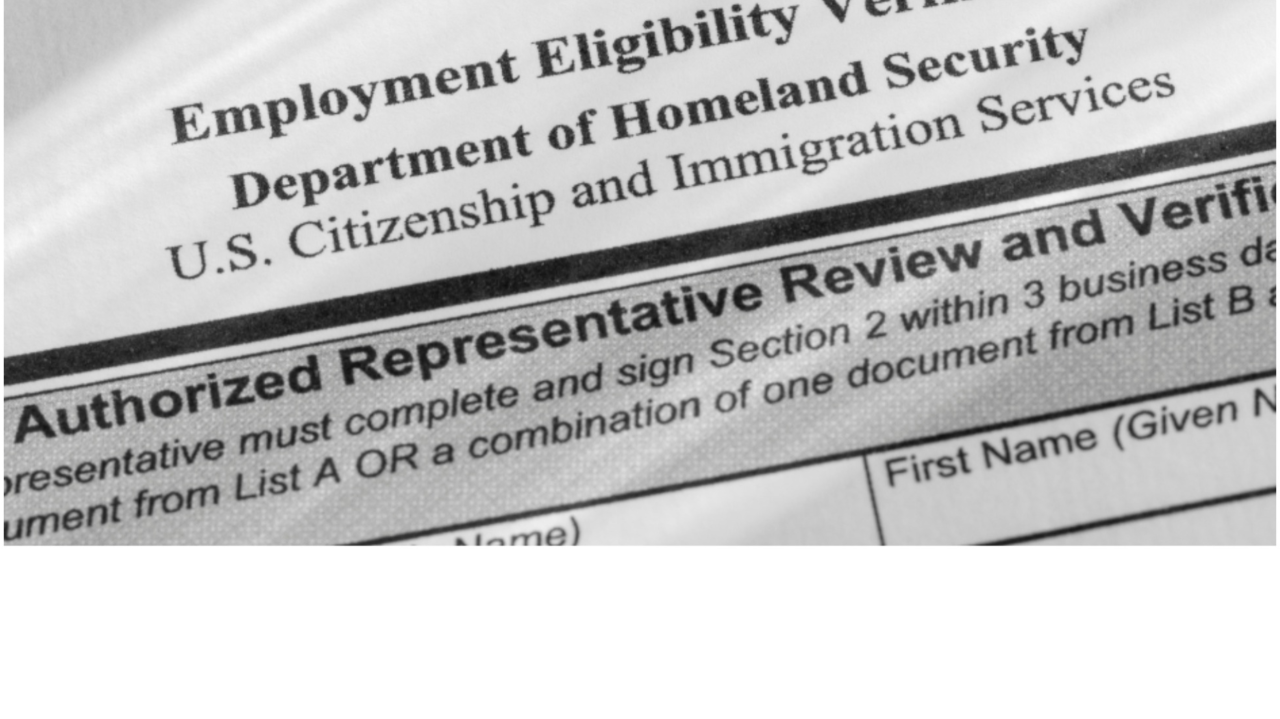
Employment verification is an essential part of responsible hiring. Incomplete Forms I-9, missed deadlines, and failures to follow employment-verification requirements can expose an organization to penalties and disruption. A consistent process helps employers identify errors early and treat employees fairly.
Why Employment Verification Matters
Form I-9 documents an employee’s identity and authorization to work in the United States. E-Verify is a separate electronic verification process used by participating employers; it does not remove the Form I-9 requirement. Employers should understand which federal, state, and contract requirements apply to their organization.
Florida’s E-Verify Requirements
Florida requires public agencies to use E-Verify for new employees. Since July 1, 2023, the requirement also applies to private employers with 25 or more employees. The 25-employee threshold does not apply to public agencies. Florida also imposes E-Verify obligations on contractors and subcontractors under its public-agency contracting rules. Employers should review the applicable definitions and requirements in Florida Statutes § 448.095.
Common Pitfalls and Best Practices
Complete the form on time. Employees must complete Section 1 by their first day of work for pay, after accepting the job offer. Employers generally must complete Section 2 within three business days after that first day. For employment lasting less than three business days, Section 2 is due on the first day. See USCIS guidance for Section 1 and Section 2.
Respect employees’ document choices. Employees choose acceptable documentation from the Form I-9 lists. Employers should not insist on a particular document or request extra documents when acceptable documentation has been presented.
Use remote examination only when eligible. The DHS alternative procedure is available to E-Verify employers in good standing at their participating hiring sites. It requires examination of document copies, a live video interaction, retention of clear copies, and the appropriate notation on Form I-9. Simply receiving emailed copies is insufficient. See the USCIS remote-examination procedure.
Keep records appropriately. Retain required Forms I-9 throughout employment. After employment ends, retain the form until the later of three years after hire or one year after termination. Apply any additional state documentation requirements, including Florida’s requirements. See USCIS retention guidance.
Make Compliance Part of the Process
HR technology can support reminders, recordkeeping, and internal reviews, but it does not guarantee compliance. Train the people completing forms, check current USCIS instructions, and review records consistently. Penalties vary by violation and applicable rules; paperwork violations and knowingly hiring or continuing to employ unauthorized workers are distinct issues. Avoid relying on a single undated maximum penalty figure.
A practical, well-maintained verification process supports both operational reliability and fair treatment of employees.
Compliance information reviewed September 24, 2026.